
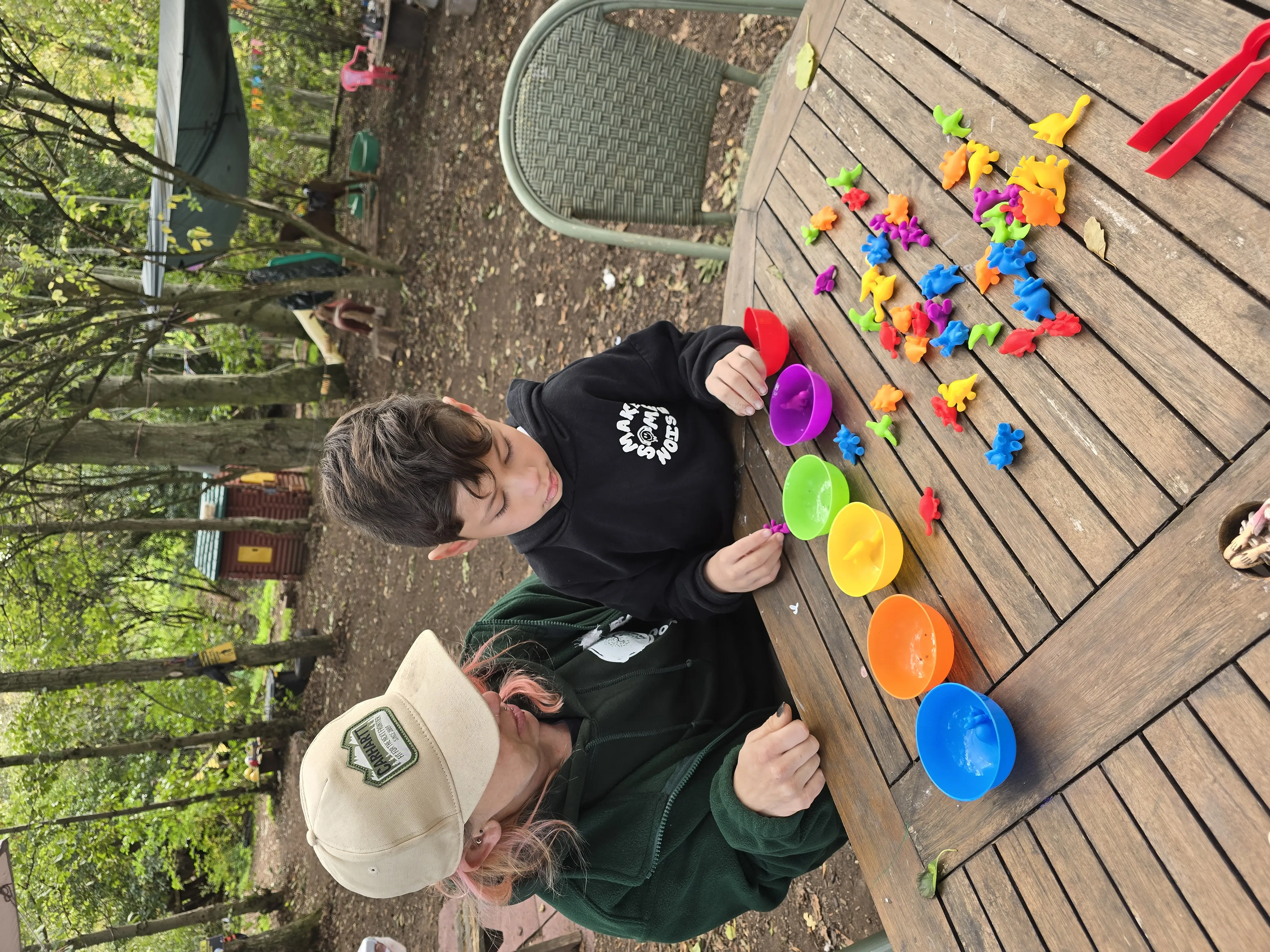
A place to belong before being expected to achieve
Forest Families supports children through trusted relationships, nature, practical learning and carefully paced support.
Who we are
Forest Families is an established, inclusive woodland provision based at Rainbow Woods near Bromsgrove. Our approach is child-centred, strengths-based and responsive to each child's needs.
- A lower-pressure environment where children can move, pause and regulate.
- Consistent adults who build trust before increasing expectations.
- Purposeful experiences that make communication and learning feel meaningful.
- Space for friendships, empathy, confidence and a sense of belonging.
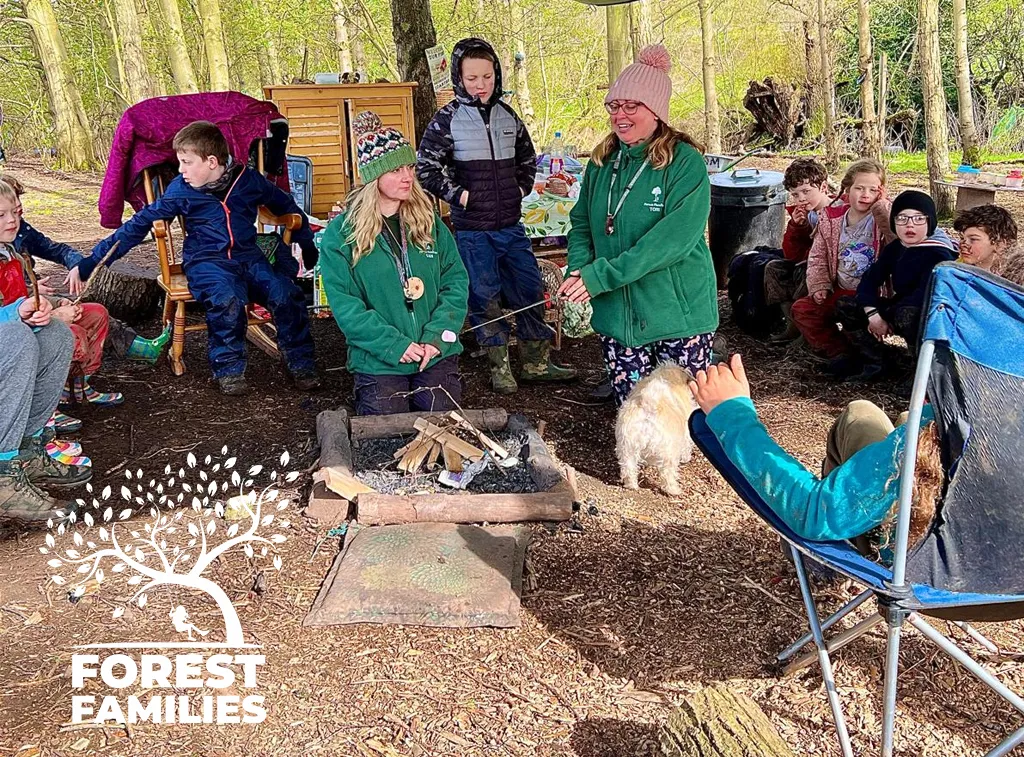
Alternative Provision
A safe bridge back into engagement, learning, relationships and the child's next appropriate step.
Personalised placements
Individual or small-group support, including 1:1 and 2:1 where required, matched carefully to need, staffing and risk assessment.
Clear targets
Three personalised targets informed by school information, EHCP outcomes, family priorities and our own observations.
Evidence and review
Learning evidence is recorded through Tapestry, with termly learning-journey reports shared with schools, families and commissioners.
Wednesday: 12.30pm-3.30pm
Impact in practice
Consistent, relational support helps children rebuild confidence and participation over time.
From crisis behaviours to pride and maturity
An 11-year-old who had become dysregulated, disengaged and unsafe in school attended Forest Families for one and a half days each week. With consistency, co-regulation, honest reflection and practical responsibility, she became increasingly regulated, helpful and proud of her progress before moving on to a specialist school.
From refusing provision to friendship and learning
A seven-year-old with high levels of need was given a low-pressure start and predictable relationships. Adults followed his interests and introduced adult-guided activities gradually. He now plays with friends, talks more about feelings and engages more confidently in learning.
Girls' Club and community sessions
Gentle routes into confidence, friendships, family support and wider participation.
Girls' Club
A nurturing woodland group for girls aged four and over, with a particular focus on social, emotional and mental health needs.
- Wednesdays, 10am-12pm.
- Girls may attend with a parent or carer initially and move towards drop-off when ready.
- Supports friendship, self-worth, emotional awareness, creative expression and gradual independence.
Community sessions
Inclusive, accessible support before families reach crisis, creating trusted relationships and reducing isolation.
- Monday: 1pm-3pm, plus three weekend sessions each month.
- Combines child-led woodland play, family connection and practical experiences.
- A gentle route into Girls' Club, Alternative Provision, holiday activities or other support.
Skilled people, safe practice
Children are supported by a multidisciplinary team with educational, SEND, safeguarding, woodland and mental-health experience.
Experienced team
Qualified Forest School leaders, teachers, SENDCO experience, Designated Safeguarding Leads and paediatric first aiders.
Quality and accountability
Safeguarding, safer recruitment, staff conduct, attendance, incident and first-aid recording are built into practice.
Transport considered
Transport may be available for some placements, subject to need, route, safeguarding, staffing and operational capacity.
Referral pathway
Every referral is considered individually to make sure Forest Families can safely meet the child's needs and provide purposeful outcomes.
Initial conversation
Share the child's needs, strengths, current circumstances and intended outcomes.
Information and assessment
Review plans, risks, support needs, transport and placement compatibility.
Planned introduction
Use visits or a phased start where needed to establish safety and trust.
Placement and review
Agree targets, record progress and review with the family and commissioning team.
Let's build the right support around the child
We welcome conversations with local authorities, schools and other commissioners about flexible support across Alternative Provision, community sessions and targeted Girls' Club places.